Laser fusion test results raise energy hopes

The controlled fusion of atoms - creating conditions like those in our Sun - has long been touted as a possible revolutionary energy source.

However, there have been doubts about the use of powerful lasers for fusion energy because the "plasma" they create could interrupt the fusion.

An article in Science showed the plasma is far less of a problem than expected.

The report is based on the first experiments from the National Ignition Facility (Nif) in the US that used all 192 of its laser beams.

Along the way, the experiments smashed the record for the highest energy from a laser - by a factor of 20.

Star power

Construction of the National Ignition Facility began at Lawrence Livermore National Laboratory in 1997, and was formally completed in May 2009.

The goal, as its name implies, is to harness the power of the largest laser ever built to start "ignition" - effectively a carefully controlled thermonuclear explosion.
It is markedly different from current nuclear power, which operates through splitting atoms - fission - rather than squashing them together in fusion.

Proving that such a lab-based fusion reaction can release more energy than is required to start it - rising above the so-called breakeven point - could herald a new era in large-scale energy production.

In the approach Nif takes, called inertial confinement fusion, the target is a centimetre-scale cylinder of gold called a hohlraum.

It contains a tiny pellet of fuel made from an isotope of hydrogen called deuterium.

During 30 years of the laser fusion debate, one significant potential hurdle to the process has been the "plasma" that the lasers will create in the hohlraum.

The fear has been that the plasma, a roiling soup of charged particles, would interrupt the target's ability to absorb the lasers' energy and funnel it uniformly into the fuel, compressing it and causing ignition.

Siegfried Glenzer, the Nif plasma scientist, led a team to test that theory, smashing records along the way.

"We hit it with 669 kilojoules - 20 times more than any previous laser facility," Nif's Siegfried Glenzer told BBC News.

That isn't that much total energy; it's about enough to boil a one-litre kettle twice over.

However, the beams delivered their energy in pulses lasting a little more than 10 billionths of a second.

By way of comparison, if that power could be maintained, it would boil the contents of more than 50 Olympic-sized swimming pools in a second.


'Dramatic step' 

 Crucially, the recent experiments provided proof that the plasma did not reduce the hohlraum's ability to absorb the incident laser light; it absorbed about 95%.

But more than that, Dr Glenzer's team discovered that the plasma can actually be carefully manipulated to increase the uniformity of the compression.


"For the first time ever in the 50-year journey of laser fusion, these laser-plasma interactions have been shown to be less of a problem than predicted, not more," said Mike Dunne, director of the UK's Central Laser Facility and leader of the European laser fusion effort known as HiPER.

"I can't overstate how dramatic a step that is," he told BBC News. "Many people a year ago were saying the project would be dead by now."

Adding momentum to the ignition quest, Lawrence Livermore National Laboratory announced on Wednesday that, since the Science results were first obtained, the pulse energy record had been smashed again.

They now report an energy of one megajoule on target - 50% higher than the amount reported in Science.

The current calculations show that about 1.2 megajoules of energy will be enough for ignition, and currently Nif can run as high as 1.8 megajoules.

Dr Glenzer said that experiments using slightly larger hohlraums with fusion-ready fuel pellets - including a mix of the hydrogen isotopes deuterium as well as tritium - should begin before May, slowly ramping up to the 1.2 megajoule mark.

"The bottom line is that we can extrapolate those data to the experiments we are planning this year and the results show that we will be able to drive the capsule towards ignition," said Dr Glenzer.

Before those experiments can even begin, however, the target chamber must be prepared with shields that can block the copious neutrons that a fusion reaction would produce.

But Dr Glenzer is confident that with everything in place, ignition is on the horizon.

He added, quite simply, "It's going to happen this year."

Chile earthquake: Shock effect on Earth's axis

The earthquake that struck Chile on Saturday may have shifted the Earth's axis and created shorter days, according to scientists at Nasa. Richard Gross, a geophysicist at Nasa's Jet Propulsion Laboratory in Pasadena, California, said the 8.8 magnitude quake could have moved the Earth's axis by 2.7 milliarcseconds (about 8cm) – enough to shorten a day by about 1.26 microseconds.

A large quake can shift huge amounts of rock and alter the distribution of mass on the planet. When that distribution changes, it changes the rate at which the planet rotates, which determines the length of a day.

"The length of the day should have got shorter by 1.26 microseconds," Gross told the Bloomberg news agency. "The axis about which the Earth's mass is balanced should have moved by 2.7 milliarcseconds."

Gross previously used the technique to estimate the shift caused by the 2004 Sumatran quake that caused the Indian Ocean tsunami. That 9.1 magnitude quake shifted the Earth's axis by 2.3 milliarcseconds and shortened a day by 6.8 microseconds.

David Kerridge, a seismologist with the British Geological Survey, said the Chile and Sumatra earthquakes were based on subduction, in which one tectonic plate slides under another, redistributing the Earth's overall mass. The effect was similar to that for an ice dancer who moved their arms in and out to accelerate and slow their spin.

"As the ice skater puts when she's going around in a circle, and she pulls her arms in, she gets faster and faster. It's the same idea with the Earth going around if you change the distribution of mass, the rotation rate changes."

Earthquakes caused by plates sliding past each other, such as the recent event in Haiti, do not have the same impact on the Earth's rotation.

Gross said the Chilean earthquake shifted the Earth's axis a greater distance than the larger Sumatran event because it was further from the equator. The fault that caused the Chilean quake also dips into the Earth at a steeper angle, which meant it moved more mass.

Alien spotting comes down to Earth

The first step to finding alien life in our galaxy is working out what sort of planet an alien might call home. Almost 400 exoplanets - planets orbiting stars outside our solar system - have been spotted and now it’s time to take a closer look.

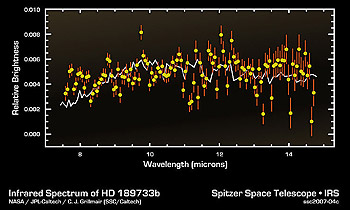
Dr Giovanna Tinetti from UCL is working on a new observation technique which will make it easier than ever to take a glimpse at the atmospheres of exoplanets, revealing further clues as to any potential inhabitants. Last month, her team of astronomers from UCL and NASA identified organic molecules in the atmosphere of a planet (the catchily named HD 189733b) nearly 63 light years away.

With these kinds of distances, bottling a sample of alien air to take back to the lab is not an option. Instead, astronomers analyse the radiation emitted from, or reflected by, a planet - a method known as spectroscopy. The various molecules in the planet's atmosphere absorb different wavelengths of radiation, leaving a telltale pattern in the overall spectrum of light captured by telescopes. By recognising these fingerprints, researchers can deduce the composition of the planet’s atmosphere.

‘We are interested in looking at light in the infrared end of the spectrum, so basically it’s thermal light emitted by the planet’, explains Tinetti. ‘The reason for this is that most of the molecules that we’re interested in, for example carbon dioxide or methane, have a much stronger signature in this part of the spectrum.’

Bringing spectroscopy back to Earth

Spectroscopy is nothing new, but has previously been confined to outer space. ‘Until now we’ve typically used space telescopes, in particular Hubble and Spitzer, for doing this type of measurement,’ says Tinetti. ‘It’s easier because you don’t have the Earth’s atmosphere in between you and the exoplanet.’

These space telescopes however have limited capability and are shared with many other researchers working on different projects, so there simply isn’t time to make the detailed observations needed to catalogue exoplanets. Instead, Tinetti and her team have optimised the infrared spectroscopy technique to produce accurate results without leaving our planet.

‘We’ve been trying to push our technique to work from the ground because we really want to concentrate all the capabilities of all the ground telescopes to keep working on the subject and have more and more measurements,‘ says Tinetti.

The method still needs a few tweaks, but in a few years’ time relatively small ground telescopes worldwide will be able to cast their gaze on far flung atmospheres, speeding up the search for habitable exoplanets. ‘The fact that we’ve now been able to reproduce results from space has opened a huge door,’ adds Tinetti.
Answers in the air

The composition of a planet’s atmosphere can tell us whether it could foster life, or even if life might already be there. Likewise, our own atmosphere could give away our presence to an alien observer .

Aliens equipped with similar telescopes to Tinetti's could easily spot water vapour and carbon dioxide in the air, suggesting that life is possible on Earth. More intriguing clues would be the presence of ozone and, if they were also looking in the visible end of the spectrum, oxygen.

‘They would be extremely surprised to see a huge signature of ozone, because ozone, like oxygen, is a very reactive type of molecule, and unless you have a constant supply in the planetary atmosphere it’s very rare that you have these molecules for a long time. So if you see a very strong signature it means that there’s a source. That would tell them that something very interesting was going on,’ comments Tinetti.

Our place in the universe

Exoplanet research isn't just about finding little green men. ‘It’s also about putting our planet and our solar system in general into a broader context – understanding how unique we are, if solar systems like ours are very frequent or very rare,’ adds Tinetti.

Even though our knowledge of other planets in our galaxy is increasing rapidly, there is still plenty left to discover. ‘One of the very interesting things about exoplanets is that they keep surprising you,’ she says. ‘No matter how many theoretical predictions you make, chances are you are not completely right.’

Ultimately, Tinetti hopes that a proposed space telescope known as THESIS will see the light of day and become the first space mission dedicated to characterising exoplanet atmospheres: ‘If we have space based mission like THESIS then we can do wonders… we shall see!’

How about a skin control pad?


Sensors turn skin into gadget control pad

The sensors can spot many different locations on the arm
Tapping your forearm or hand with a finger could soon be the way you interact with gadgets.

US researchers have found a way to work out where the tap touches and use that to control phones and music players.

Coupled with a tiny projector the system can use the skin as a surface on which to display menu choices, a number pad or a screen.

Early work suggests the system, called Skinput, can be learned with about 20 minutes of training.

"The human body is the ultimate input device," Chris Harrison, Skinput's creator, told BBC News.

Sound solution

He came up with the skin-based input system to overcome the problems of interacting with the gadgets we increasingly tote around.

Gadgets cannot shrink much further, said Mr Harrison, and their miniaturisation was being held back by the way people are forced to interact with them.

The size of human fingers dictates, to a great degree, how small portable devices can get. "We are becoming the bottleneck," said Mr Harrison.

A finished device would be far smaller than the bulky prototype


To get around this Mr Harrison, a PhD student in computer science at Carnegie Mellon and colleagues Desney Tan and Dan Morris from Microsoft Research, use sensors on the arm to listen for input.

A tap with a finger on the skin scatters useful acoustic signals throughout the arm, he said. Some waves travel along the skin surface and others propagate through the body. Even better, he said, the physiology of the arm makes it straightforward to work out where the skin was touched.

Differences in bone density, arm mass as well as the "filtering" effects that occur when sound waves travel through soft tissue and joints make many of the locations on the arm distinct.

Software coupled with the sensors can be taught which sound means which location. Different functions, start, stop, louder, softer, can be bound to different locations. The system can even be used to pick up very subtle movements such as a pinch or muscle twitch.

"The wonderful thing about the human body is that we are familiar with it," said Mr Harrison. "Proprioception means that even if I spin you around in circles and tell you to touch your fingertips behind your back, you'll be able to do it."

"That gives people a lot more accuracy then we have ever had with a mouse," he said.

Early trials show that after a short amount of training the sensor/software system can pick up a five-location system with accuracy in excess of 95%.

Accuracy does drop when 10 or more locations are used, said Mr Harrison, but having 10 means being able to dial numbers and use the text prediction system that comes as standard on many mobile phones.

The prototype developed by the research team sees the sensors enclosed in a bulky cuff. However, said Mr Harrison, it would be easy to scale them down and put them in a gadget little bigger than a wrist watch.

Mr Harrison said he envisages the device being used in three distinct ways.

The sensors could be coupled with Bluetooth to control a gadget, such as a mobile phone, in a pocket. It could be used to control a music player strapped to the upper arm.

Finally, he said, the sensors could work with a pico-projector that uses the forearm or hand as a display surface. This could show buttons, a hierarchical menu, a number pad or a small screen. Skinput can even be used to play games such as Tetris by tapping on fingers to rotate blocks.

Mr Harrison would not be drawn on how long it might take Skinput to get from the lab to a commercial product. "But," he said, "in the future your hand could be your iPhone and your handset could be watch-sized on your wrist."

Superchilly chemistry

PORTLAND, Ore. — Researchers have been able to stop and start chemical reactions between molecules at temperatures colder than the depths of outer space. And new theoretical descriptions help explain the quantum mechanical details of these ultracold chemical reactions.

The details, presented March 17 at a meeting of the American Physical Society, offer glimpses into the burgeoning field of ultracold physics, which enables the creation of strange new states of matter and has potential applications in quantum computers and precision measurement devices (SN: 12/20/08, p. 22). At temperatures this low, the molecules no longer obey everyday rules, but instead are governed by quantum mechanics.

Deborah Jin and Jun Ye, both of the University of Colorado at Boulder and the JILA research center in Boulder, led experiments which used precisely tuned lasers and electric fields to deftly start and stop reactions between ultracold potassium-rubidium molecules.

“It’s a beautiful demonstration of how quantum mechanics works,” said Jeremy Hutson, a chemist at the University of Durham in England who studies ultracold reactions. The new studies reveal the existence of strange quantum effects “in a very simple regime that’s never been explored before.”

The University of Colorado researchers used lasers to cool the potassium-rubidium molecules, halting all the frenetic motion that usually characterizes the jittery molecules. Held in this chilly “ground state” at around 200 nanokelvin, the molecules moved incredibly slowly, Ye said. But after a second or so, the molecules started to disappear by twos.

“What’s going on here is chemistry,” Jin says. The potassium-rubidium molecules interact with each other to form molecules made up of two potassium atoms and two rubidium atoms. These results also appeared February 12 in Science.

At the meeting, Jin and Ye presented new preliminary results showing that not only do these chemical reactions occur, but that they can be sped up and halted. Potassium-rubidium molecules have slight electric charges at each end — slightly negative at the potassium atom and slightly positive at the rubidium atom. These dipole moments can act like small handles, giving researchers a way to manipulate the molecules. When the team turned up an electric field around the ultracold molecules, the chemical reaction rate went up dramatically by a factor of 20 or 30, Jin said. The positive rubidium atom on one molecule was hungrier for the negative potassium atom on another molecule.

In a second set of experiments, Jin and Ye showed that the molecules’ chemical reactions also could be suppressed. Since these chemical reactions happen only when the molecules line up head to tail, researchers could lock the molecules into a conformation that prevents the molecules from reacting. The team used a laser to slice a big glob of ultracold molecules into 20 or so very thin, pancakelike shapes. This tight conformation prevented the molecules from lining up head to tail, and the chemical reactions were suppressed, the team found. The ability to stop these chemical reactions — which can be bothersome, depending on the experiment — is important, Jin says. “Chemical reactions are great and fun,” until an experiment requires the original molecules themselves, Jin says. “Then those chemical reactions are kind of a problem.”

The experimental results highlight how scientists can control the reactions of the molecules under different conditions, but new theoretical results reported at the meeting illuminate how the ultracold molecules find each other in the first place. Paul Julienne, a theoretical physicist at the National Institute of Standards and Technology in Gaithersburg, Md., presented a quantum mechanical description of the molecules’ reaction rates. At temperatures this cold, the molecules behave more like diffuse waves rather than discrete spots. Julienne and his collaborator Zbigniew Idziaszek of the University of Warsaw in Poland found that under ultracold conditions, long-range effects of these waves, which can reach hundreds of nanometers, influence how the molecules close in on each other.

Once the molecules are within one nanometer or so of each other, they “react with great certainty,” Julienne said. “The reaction rates turn out to depend entirely on how the long-range forces work.” The theoretically predicted reaction rates, which will appear soon in Physical Review Letters, agree very well with the rates observed by Jin and Ye in their experiments, Julienne said.

Collections of ultracold, polar molecules might lead to new forms of matter, as well as technological applications, the researchers said. An internal property of the molecule called spin could hold quantum information and form the basis of a quantum computer, for instance.

“The beautiful thing is that we’ve got full quantum control over all degrees of freedom of the particles,” Julienne says. “I’m hoping that we can do some really neat things with these molecules.”

Why add acid to water when diluting?

Whether you add acid to the water or water to the acid is one of those things I know it's important to remember, but always have to puzzle out. Sulfuric acid (H2SO4) reacts very vigorously with water, in a highly exothermic reaction. If you add water to concentrated sulfuric acid, it can boil and spit and you may get a nasty acid burn.

If you spill some sulfuric acid on your skin, you want to wash it off with copious amounts of running cold water as soon as possible. Water is less dense than sulfuric acid, so if you pour water on the acid, the reaction occurs on top of the liquid. If you add the acid to the water, it sinks and any wild and crazy reactions have to get through the water or beaker to get to you.

How Solar Cells work?

Solar (or photovoltaic) cells convert the sun’s energy into electricity. Whether they’re adorning your calculator or orbiting our planet on satellites, they rely on the the photoelectric effect: the ability of matter to emit electrons when a light is shone on it.

Silicon is what is known as a semi-conductor, meaning that it shares some of the properties of metals and some of those of an electrical insulator, making it a key ingredient in solar cells. Let’s take a closer look at what happens when the sun shines onto a solar cell.

Sunlight is composed of miniscule particles called photons, which radiate from the sun. As these hit the silicon atoms of the solar cell, they transfer their energy to loose electrons, knocking them clean off the atoms. The photons could be compared to the white ball in a game of pool, which passes on its energy to the coloured balls it strikes.

Freeing up electrons is however only half the work of a solar cell: it then needs to herd these stray electrons into an electric current. This involves creating an electrical imbalance within the cell, which acts a bit like a slope down which the electrons will flow in the same direction.

Creating this imbalance is made possible by the internal organisation of silicon. Silicon atoms are arranged together in a tightly bound structure. By squeezing small quantities of other elements into this structure, two different types of silicon are created: n-type, which has spare electrons, and p-type, which is missing electrons, leaving ‘holes’ in their place.

When these two materials are placed side by side inside a solar cell, the n-type silicon’s spare electrons jump over to fill the gaps in the p-type silicon. This means that the n-type silicon becomes positively charged, and the p-type silicon is negatively charged, creating an electric field across the cell. Because silicon is a semi-conductor, it can act like an insulator, maintaining this imbalance.

As the photons smash the electrons off the silicon atoms, this field drives them along in an orderly manner, providing the electric current to power calculators, satellites and everything in between.